Was once, too, at the full, and round earth’s shore
Lay like the folds of a bright girdle furled.
But now I only hear
Its melancholy, long, withdrawing roar,
Retreating, to the breath
Of the night-wind, down the vast edges drear
And naked shingles of the world.
Ah, love, let us be true
To one another! for the world, which seems
To lie before us like a land of dreams,
So various, so beautiful, so new,
Hath really neither joy, nor love, nor light,
Nor certitude, nor peace, nor help for pain;
And we are here as on a darkling plain
Swept with confused alarms of struggle and flight,
Where ignorant armies clash by night.
Explanation :-
‘Dover Beach’ by Matthew Arnold was published in 1867 in the volume entitled New Poems. This piece is made up of four stanzas containing a variable number of lines. They range in length from fourteen to six lines in length. There is no consistent rhyme scheme but there are a number of random end rhymes such as “-and” and “-ay” throughout the poem and it is written in irregular Error! Post not found for word:iambic pentameter.
Love's Philosophy poem is a romantic lover's playful argument, putting forward his case for the union of love. Natural imagery and strong rhyme appeal to the reader's senses, presenting this relationship as something innocent, simple and inevitable. 'Philosophy' here means an argument or a way-of-thinking.
The title, ‘Ode on Solitude,’ gives the reader a pretty good idea of what the poem is about early on. Of course, it would be far too simple an analysis to say that Alexander Pope’s oldest surviving poem is simply “about solitude,” but it does provide a solid starting point from which to analyze the poem.
When Pope wrote his work, he had the idea of solitude in mind, as do a great many poets who express themselves best through the written word, and perhaps less so in the company of others. Solitude itself is an important thing to attain from time to time, and perhaps it makes sense to think of one of Pope’s oldest poems as being about a very basic human desire.
I am Nidhi jethava and I am my student of Mk Bhavnagar university. In this blog I am going to discuss about 'Thou Hast Made Me' by John Donne.
Holy Sonnets: Thou hast made me, and shall thy work decay?
BY JOHN DONNE
Thou hast made me, and shall thy work decay?
Repair me now, for now mine end doth haste,
I run to death, and death meets me as fast,
And all my pleasures are like yesterday;
I dare not move my dim eyes any way,
Despair behind, and death before doth cast
Such terror, and my feebled flesh doth waste
By sin in it, which it towards hell doth weigh.
Only thou art above, and when towards thee
By thy leave I can look, I rise again;
But our old subtle foe so tempteth me,
That not one hour I can myself sustain;
Thy grace may wing me to prevent his art,
And thou like adamant draw mine iron heart.
Explanation :-
‘Thou hast made me, and shall thy work decay?’ by John Donne is a fourteen-line sonnet that is contained within one block of text. The lines follow a consistent pattern of rhyme that conforms to the traditional Petrarchan, or Italian, sonnet form.
The poem begins with the speaker asking God if he’s going to allow his creation, the speaker, to fall into “decay.” He has lived a bad life and now all his sins are catching up with him. The speaker can feel his body falling apart around him and he needs God to fix him as soon as possible. If he cannot get back some control over himself he knows that he will walk straight to death, and perhaps enter into Hell.
The poem concludes with the speaker comparing his own “iron heart” to God’s strong, metal-like presence in his life. God acts as a magnet, drawing the speaker in closer and closer and winging him away from his sins and the Devil.
I am Nidhi Jethava and in this blog I am going to write down a brief interpretation about 'Daffodils' by William Wordsworth.
Daffodils
I wandered lonely as a cloud
That floats on high o'er vales and hills,
When all at once I saw a crowd,
A host, of golden daffodils;
Beside the lake, beneath the trees,
Fluttering and dancing in the breeze.
Continuous as the stars that shine
And twinkle on the milky way,
They stretched in never-ending line
Along the margin of a bay:
Ten thousand saw I at a glance,
Tossing their heads in sprightly dance.
The waves beside them danced; but they
Out-did the sparkling waves in glee:
A poet could not but be gay,
In such a jocund company:
I gazed—and gazed—but little thought
What wealth the show to me had brought:
For oft, when on my couch I lie
In vacant or in pensive mood,
They flash upon that inward eye
Which is the bliss of solitude;
And then my heart with pleasure fills,
And dances with the daffodils.
Interpretation
Daffodils is a well-known poem by Romantic poet William Wordsworth. This simple poem, one of the loveliest and most famous in the Wordsworth canon, revisits the familiar subjects of nature and memory, this time with a particularly (simple) spare, musical eloquence. The plot is extremely simple, depicting the poet’s wandering and his discovery of a field of daffodils by a lake, the memory of which pleases him and comforts him when he is lonely, bored, or restless. The characterization of the sudden occurrence of a memory—the daffodils “flash upon the inward eye / Which is the bliss of solitude”—is psychologically acute, but the poem’s main brilliance lies in the reverse personification of its early stanzas. The speaker is metaphorically compared to a natural object, a cloud—“I wandered lonely as a cloud / That floats on high...”, and the daffodils are continually personified as human beings, dancing and “tossing their heads” in “a crowd, a host.” This technique implies an inherent unity between man and nature, making it one of Wordsworth’s most basic and effective methods for instilling in the reader the feeling the poet so often describes himself as experiencing.
I am Nidhi Jethava and in this blog I am going to write down a brief interpretation about ‘Sign No More, Ladies’ by William Shakespeare.
(from Much Ado About Nothing)
Sigh no more, ladies, sigh no more.
Men were deceivers ever,
One foot in sea, and one on shore,
To one thing constant never.
Then sigh not so, but let them go,
And be you blithe and bonny,
Converting all your sounds of woe
Into hey nonny, nonny.
Sing no more ditties, sing no more
Of dumps so dull and heavy.
The fraud of men was ever so
Since summer first was leafy.
Then sigh not so, but let them go,
And be you blithe and bonny,
Converting all your sounds of woe
Into hey, nonny, nonny.
Interpretation :-
This poem/song is meant to sooth all girls who have been hurt by a man’s cheating. It is quite a cheerful little tune blaming men’s nature for their indiscretions and encouraging girls to avoid depression and not get hung up on these cheaters, but carry on with their lives in a positive and happy frame of mind.
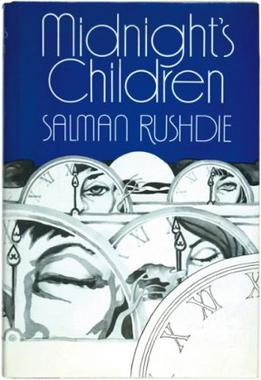
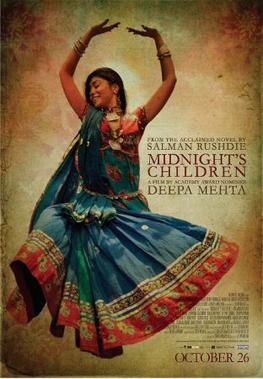
I am Nidhi Jethava and today I am going to ponder some of the questions about the post-colonial literature ‘ Midnight’s children’ by author Salman Rushdie.
Since 2000, Rushdie has lived in the United States. He was named Distinguished Writer in Residence at the Arthur L. Carter Journalism Institute of New York University in 2015.[7] Earlier, he taught at Emory University. He was elected to the American Academy of Arts and Letters. In 2012, he published Joseph Anton: A Memoir, an account of his life in the wake of the controversy over The Satanic Verses.
Q. 1 Narrative technique (changes made in film adaptation - for eg. absence of Padma, the Nati, the listener, the commenter - What is your interpretation?)
Answer :-
In the movie ‘ Midnight’s Children’ so many changes had been made by the director. So many characters are not included and there is also a slight change in narrative technique also. In the original text the story is told by the protagonist himself and the story is listened to by Padma. This technique is connected with Bharatmuni’s ‘ Natya Shastra. It means here Saleem is Nat and Padma is Nati. In film adaptation this method is changed and here Saleem tells the story but the audience plays the role of nati.
2. Characters (how many included, how many left out - Why? What is your interpretation?)
Characters introduced in Book One (approximately 1915–1947) in approximate order of appearance:
Aadam Aziz is a doctor and the father of Amina Sinai, or Mumtaz, Saleem's mother. He has many children with Naseem Ghani, and struggles with questions of the existence of God throughout the novel. He is a "half and halfer", an Indian with a western education and outlook. He narrowly survives death in the Amritsar Massacre of 1919.
Aadam Aziz's Mother runs the jewel business of her husband. She is often shrewd toward Aadam. She spends time caring for her disabled husband until his passing, at which time she follows him, relieved of her duty.
Aadam Aziz's Father is a formerly successful jewel merchant, whose mentality has now declined. He spends all his time in his room in the company of birds, who he can communicate with. When the birds leave, he passes away.
Tai is a boatman on Dal Lake and a friend of Aadam Aziz. At times he demonstrates an ability to predict the future and, while most people consider him insane, he makes several insightful remarks, the most important of which is his advice to Aadam Aziz to "follow his nose."
Naseem Ghani is the daughter of the wealthy landlord Ghani. She is first Aadam Aziz's patient and then becomes his wife. She is the mother of Mumtaz Aziz who later becomes Amina Sinai. She is dramatic and strong-willed, possessing a lot of power in her relationship with her husband Aadam Aziz. Later referred to by Saleem as "Reverend Mother". She has two large moles on her face referred to as witches nipples.
Ghani the landowner is Naseem's father. He owns a lot of property around Dal Lake in Kashmir.
Oskar Lubin is a German anarchist friend of Doctor Aziz from his student days in Heidelberg, Germany. He is killed in a road accident while demonstrating outside an army barracks in Germany in 1919 during the German Revolution.
Ilse Lubin is Oskar's wife and another anarchist friend of Aadam Aziz from his student days in Heidelberg. After Oscar's death in 1919 she visits Aadam in Srinagar and drowns herself in Dal Lake.
Ingrid another anarchist friend in Heidelberg.
Brigadier R. E. Dyer, an officer in the British army and Martial Law Commander of Amritsar who orders his men to fire on an unarmed crowd. An actual historical event and personage, see Reginald Dyer.
Alia is the eldest daughter of Aadam and Naseem Aziz; she is the sister of Amina Sinai (Mumtaz) and Emerald. Together they are known as the "Teen Batti" or three bright lights. Alia suffers from a lifelong love for Ahmed Sinai, whom her sister Mumtaz marries. Her resentment toward her sister manifests itself in the meals she cooks, and therefore affects those who eat what she prepares. She is described as clever and plump. She becomes an unmarried school mistress in Pakistan.
Amina Sinai (a.k.a. Mumtaz) is the middle daughter of Aadam and Naseem Aziz. The sister of Alia and Emerald. She is described as dark skinned, in later life she becomes plump and suffers from facial hair and verrucas. She has her name changed to Amina when she gets married. Rushdie repeatedly describes Amina Sinai as "assiduous" in her wifely efforts. By sheer willpower, she forces herself to love her husband Ahmed Sinai. However, during her marriage to him she also has an affair with Nadir Khan, to whom she was married for two years in her youth, although they never consummated the marriage.
Mian Abdullah (Also known as the Hummingbird) is a pro-Indian Muslim political figure, who dies at the hands of assassins.
The Rani of Cooch Naheen a wealthy Muslim woman who sponsors the political campaign of the Hummingbird. She is the intellectual friend of Aadam Aziz. Her name is a play-on-words, literally meaning "The Queen of Nothing" in English.
Nadir Khan is Mumtaz's first husband. He is "the Hummingbird's" personal secretary, and is known for his rhymeless poetry. After the Hummingbird's assassination, Aadam Aziz agrees to hide Nadir in the Aziz basement. Naseem is so infuriated by Aadam's decision that she vows silence, which lasts for three years. Mumtaz falls in love with Nadir, they marry privately, and live together in the basement. Aadam discovers that the marriage has not been consummated after two years, Naseem breaks her silence berating her husband and Nadir, and Nadir summarily divorces Mumtaz and flees the household. He changes his name to Nasir Qasim and rekindles their relationship in clandestine meetings some ten years later.
Hammdard the rickshawman is a rickshaw servant who lives behind Aadam and Naseem's house.
Rashid the rickshaw boy is the son of Hammdard. He lives behind Aadam and Naseem's house. He is often seen talking with Hanif and other boys outside the house. He informs Doctor Aziz that Nadir Khan needs a place to hide. He later teaches the young Saleem how to ride a bicycle.[1]
Emerald the youngest and prettiest daughter of Aadam and Naseem Aziz; she is Saleem's aunt, the sister of Mumtaz. She marries General Zulfikar.
General Zulfikar is the husband of Emerald, who is involved with Pakistani political events. Is described as having a face like Pulcinella. He becomes a father figure to Saleem during his stay in Pakistan. He is killed by his own son in the end.
Ahmed Sinai is Saleem's father and Amina's husband. He is originally a dealer in leathercloth, but becomes a property speculator when he moves to Bombay. He dreams of reordering the chapters of the Koran in a true chronology. After Saleem is born, his wife loses interest in him and he becomes an alcoholic. He is also involved in the tetrapod business with Dr. Narlikar.
Lifafa Das is a peep show street man who leads Amina to Shri Ramram Seth in gratitude after she saves his life from a Muslim mob.
Shri Ramram Seth is a Hindu seer, a cousin of Lifafa Das. Amina visits him while pregnant and he makes prophecies on the future life of her yet unborn son, Saleem Sinai.
William Methwold is an Englishman from whom the Sinais buy their house in Breach Candy, Bombay. When selling his housing estate, (known as Methwold's Estate) he stipulates that all buyers must live exactly as their previous English occupants did until the hour of independence. Methwold invites Wee Willie Winkie and his wife, Vanita to perform for him. He sends Winkie out on an errand, and seduces Vanita, resulting in Vanita becoming pregnant. Methwold is Saleem's biological father. He is said to be a direct descendant of William Methwold (c 1590- 1653) the historical Englishman who planned the city of Bombay.
Wee Willie Winkie is an accordionist and entertainer. He is Shiva's non biological father, and Vanita's husband.
Vanita is the wife of Wee Willie Winkie; she is revealed to be Saleem's biological mother, who dies during labor.[2]
Mary Pereira is a midwife and servant, who switches Shiva and Saleem at birth in an attempt at impressing her sweetheart Joseph D'Costa. She is consumed by guilt by her action and offers her services as Saleem's nursemaid to try to make amends. She is a Christianised Indian. After confessing her crime she flees to reemerge later as the owner of a pickle factory with the name of Mrs Braganza, a name she borrowed from Catherine of Braganza, the Portuguese princess who gave Bombay to the English in 1662 as part of her dowry.[3]
Joseph D'Costa is Mary Pereira's sweetheart, a hospital porter, a communist political radical and a most wanted man by the Indian police. He is cornered by police, bitten by a krait, and shot close to the Methwold Estate. Mary mistakes the leprosy-stricken Musa for his ghost.
Suresh[4] Narlikar is a child hating gynecologist and businessman, who lives on Methwold's Estate in Bombay. He owns the nursing home where both Saleem and Shiva are born at midnight on 15 August 1947. He forms a business partnership with Saleem's father, Ahmed Sinai, to reclaim land from the sea. He is killed by a mob of language marchers in 1957.
Doctor Bose is the doctor who delivers Saleem. He works in the charity ward of Doctor Narlikar's nursing home.
Ibrahim Ibrahim a next door neighbor in Sans Souci villa on Methwold's Estate in Bombay. He is elderly and owns sisal farms in Africa. He lives with his sons, Ismail and Ishaq.
Ismail Ibrahim' a neighbour to the Sinai's who is a crooked lawyer. Amina asks him in secret to act for the family to recover Ahmed Sinai's frozen assets.
Nussie Ibrahim, Ismail's wife, who is nicknamed The Duck because of the way she walks. She is the mother of Sonny Ibrahim.[5]
Ishaq Ibrahim, a hotel owner lives with his father and brother on the Methwold's Estate.[6]
Adi Dubash A nuclear physicist who works on India's nuclear program. Killed by choking on an orange pip.[6]
Mrs Dubash, his wife who is a religious fanatic. They are the ground floor neighbors to the Sinai's in the Versailles Villa on the Methwold's Estate in Bombay. Their son is called Cyrus the Great by the children of Methwold's Estate because of his intelligence.
Cyrus the Great the Dubashes only son and childhood friend of Saleem's. After his father's death through choking on an orange pip his mother grooms him to become the guruLord Kushro Khusrovand.[7]
Sonny Ibrahim is Saleem's neighbour and friend. His forceps birth has given him a misshapen forehead.
Eyeslice Sabarmati one of Saleem's childhood friends on Methwold's Estate, the son of Commander Sabarmati and his wife Lila, and the brother of Hairoil. He is blinded in the right eye by a stone thrown by Shiva after he had taunted him about his poverty.[8]
Shiva is a boy who is born at the same moment as Saleem. He is the true biological son of Ahmed and Amina Sinai, but is raised in poverty in the Bombay slums, initially by Wee Willie Winkie, as he was switched at birth with the baby Saleem. Shiva possesses an amazing ability to fight. Shiva is the knees in the prophecy of "knees and nose" and is the possessor of abnormally large knees. His fighting skill makes him a war hero and gets him promoted to the rank of major in the Indian army.
Characters introduced in book two (ca. 1947 – ca. 1965) in approximate order of appearance:
Vishwanath the post boy is a servant at Methwold's Estate. He is seen frequently delivering messages to and from Methwold's Estate on his Arjuna Indiabike.
Jamila Sinai is Saleem's younger sister, nicknamed "the brass monkey" because of her thick thatch of red-gold hair [9] and because she is conceived the night her father's assets are frozen by the state. She goes on to become the most celebrated singer in West Pakistan, Jamila Singer.
Dr Schaapsteker an elderly expert on snake venom who rents the top floor of Buckingham Villa, the Sinai's house, after Ahmed Sinai's has his assets frozen.[10]
Purushottam, the sadhu who takes up residence in the Sinai's garden at Saleem's birth and lives with the garden tap dripping constantly on his head.[11]
Musa is the disgraced servant of Ahmed Sinai whom Mary mistakes for the ghost of Joseph D'Costa.
Johny Vaheel the police inspector who exposes Musa as the thief of the Sinai's valuables and corners Joseph D'Costa in the clock tower of Mahalaxmi Racecourse across the road from Methwold's Estate.[12]
Hanif is Saleem's uncle and Amina's brother. He is a screenwriter who enjoys some fame in his youth, but who grows disillusioned later in life with Bollywood and the superficiality of the film industry, and commits suicide. He is Pia's husband.
Pia is Hanif's attractive wife, a former actress and later joint petrol-pump owner with Naseem, her mother-in-law.
Mustapha Aziz is another uncle of Saleem's, the brother of Mumtaz, described as tall but stooped with a droopy mustache.[13] He becomes a second rank civil servant in New Delhi, always passed over for promotion. His wife is Sonia. They have strangely silent children who've been beaten into submission.
Sonia Aziz (née Khorovani) is Mustapha's wife. She is eventually committed as insane.[14]
Evie Lilith Burns is Saleem's American childhood sweetheart. She is a freckled tomboy with tooth braces. She later knifes an old lady on her return to America and is sent to reform school.[15]
Zafar the son of General Zulfikar. Zafar suffers from enuresis (bed-wetting) which annoys his father and appalls women.
Homi Catrack a film magnate and racehorse owner who is a neighbour of the Sinai family in Bombay. He has an affair with Lila Sabarmati and is subsequently murdered by Commander Sabarmati. His idiot daughter Toxy lives in seclusion with her fearsome nurse Bi-Appah.[5]
Lila Sabarmati is commander Sabarmati's wife, who is shot, but not killed by him, for having an affair with Homi Catrack.
Commander Sabarmati is the husband of Lila Sabarmati, a high flying officer in the Indian navy and neighbor to the Sinai's in Bombay. He shoots his unfaithful wife and murders her lover.
Hairoil Sabarmati, the Sambarmati's son and classmate of Saleem.
Alice Pereira is Mary's sister, who works for Ahmed Sinai as his secretary.
Croaker Crusoe, the headmaster of the Cathedral School in Bombay where Saleem receives his education.
Mr Emil Zagaloo is Saleem's geography teacher at the Cathedral School. He is sacked after pulling out a clump of Saleem's hair.[16]
Rushdie, a prefect at the Cathedral School. A minor character, but notable by the use of the author's name.[17]
Glandy Keith Colaco an overweight bully at the cathedral school [18]
Fat Perce Fishwala another overweight bully at the cathedral school [18]
Masha Miovic, a champion breaststroke swimmer and pupil at the Walsingham school. A friend of the Brass Monkey, she partners Saleem at the school social and faints when his finger is severed.
Jimmy Kapadia, a classmate of Saleem's. He is a scholarship boy at the cathedral school, the son of a taxi driver. Saleem believes he murders him through a dream.[19]
Soumitra, one of the Midnight's Children, a boy who is able to travel through time.[20]
Sundari, one of the Midnight's Children, a girl of such intense beauty that she blinded her mother at her birth. Her face is later slashed with a knife by an aunt and she becomes a beggar.[21]
Parvati-the-witch is one of the Midnight's Children, and the only one to become a friend (and later wife) of Saleem, as Leylah Sinai. She is a child of the conjurers ghetto in New Delhi but can perform real magic. She is the mother of Shiva's biological son Aadam Sinai. She is killed in the Sanjay’s "cleansing" of the Jama Masjid slum during the Emergency of 1975–1977.
Narada / Markandaya, one of the Midnight's Children who has the ability to change sex at will.[22]
Dom Minto a private detective hired by Commander Sabarmati to investigate his wife's infidelity.[23]
Major (Retired) Alauddin Latif, nicknamed Uncle Puffs is Jamila Singer's agent. A former soldier in the Pakistan border patrol, he has seven daughters, known as the Puffias, who he offers to Saleem to choose one as a wife.
Tai Bibi is a 51-year-old whore who Saleem visits in Karachi. She has the ability to change her body smell at will and mimic the smell of others.
Mutasim is the son of a wealthy Pakistani who is western educated and has a Beatles haircut. He is an unsuccessful suitor to Jamila Singer. He is killed in the Indo-Pakistani War of 1965.[24]
Characters introduced in Book Three
Characters introduced in book three (c1965 - c1980?)in approximate order of appearance:-
Ayooba Baloch the leader of Saleem's platoon in the Pakistani army. Nicknamed the tank. He is sixteen and hates vegetarianism or any sign of unmanliness.[25] He is killed in the Bangladesh Liberation War of 1971, when, while mourning the unfairness of life with Saleem, he is shot by a sniper.
Farooq Rasheed, one of Saleem's platoon in the Pakistani army. Sixteen years old and described as a born follower.[25] Killed in the Bangladesh Liberation War when he is shot by a sniper while scouting a battlefield.[26]
Shaheed Dar, one of Saleem's platoon in the Pakistani army. Perhaps fifteen years old (he lied about his age), gloomy and resigned to martyrdom in the army. He is killed in the Bangladesh Liberation War when a grenade splits him in half. Saleem takes him to the top of a mosque, where his scream echoes over the loudspeaker as he bleeds out.[27]
Brigadier Iskandar Commander of the CUTIA unit (Canine Unit for Tracking and Intelligence Activities) of trained dog handlers.[25]
Sgt Maj Najmuddin, Sergeant Major in the CUTIA unit.[28]
Deshmukh, the vendor of notions, an elderly peasant from Bangladesh met looting a battlefield.[29]
Sam Manekshaw Commander of the Indian army at the surrender of Dhaka[30] He was a former colleague of Tiger Niazi in the British colonial army. One of the few historical personages, given a voice in the novel.
Tiger Niazi Commander of the Pakistan army at the surrender of Dhakar [30] One of the few historical personages, given a voice in the novel.
Picture Singh (aka The Most Charming Man in The World) is a snake charmer from the conjurers' ghetto in New Delhi. He is seven feet tall, a communist and the undisputed leader of the ghetto. He becomes a father figure and a friend to Saleem. His photo once appeared on half the Kodak advertisements in India which gave him the nickname Picture.[31]
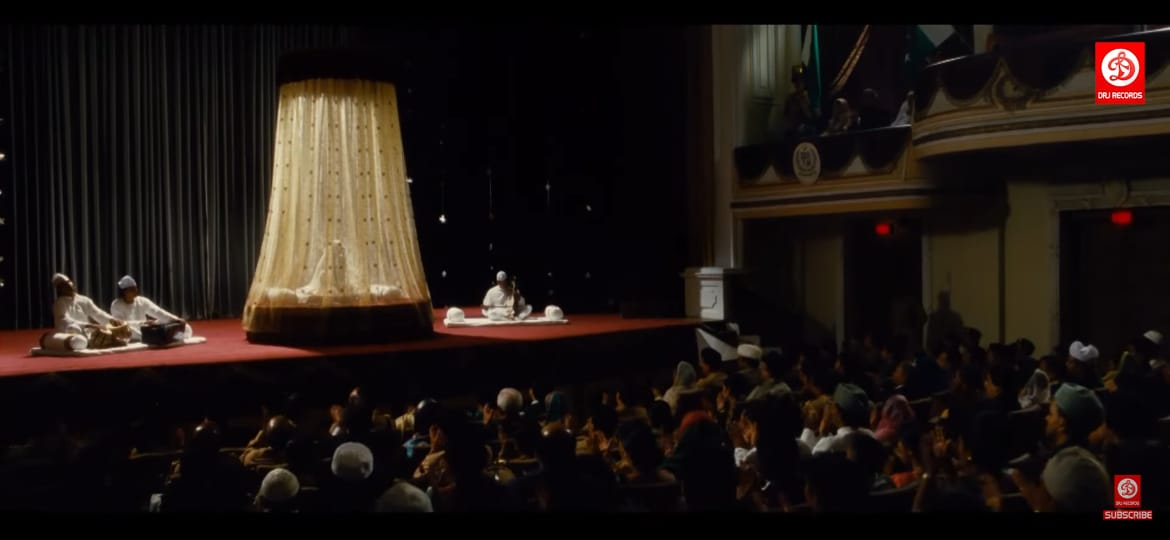
Master Viram, a sitarist whose playing is able to respond to and exaggerate the faintest emotions in the hearts of the audience.[32]
Resham Bibi, a superstitious old woman from the conjurers' ghetto in New Delhi. She sees Saleem as bad luck.[33] She dies of cold.[34]
Chisti Khan a fakir from the conjurers' ghetto who has an ageless face.[35]
Roshanara Shetty, the child wife of the steel magnate S.P. Shetty. She manages to injure the ego of Shiva by telling him all the society ladies he courted were laughing at him behind his back.
Aadam Sinai is Saleem's son, and Shiva's biological son. He has extraordinarily large ears and a strong will. He is part of a second wave of Midnight's Children.
Durga is a washerwoman with huge lactating breasts. She is wet nurse to Aadam Sinai and a succubus to Picture Singh who becomes infatuated with her even as she drains his strength.[36]
The Widow is the novel's fictional representation of Indira Gandhi. The Widow is alluded to early in the novel, but is only revealed to be Indira Gandhi towards the end of Book Three. Much of the later tragic events that befall Saleem and the rest of the Midnight's Children are attributed to her.
The Widow's Hand is a servant of the Widow responsible for Saleem's torture. She has a similar hairstyle of the Widow, glasses and is described as very attractive.
Anand (Andy) Shrof, a Bombay westernised businessman and playboy and owner of the Metro Cub Club.[37]
Maharaja of Cooch Naheen, A young snake charmer who rivals Picture Singh as the most charming man in the world.[38]
Original book consists of more than 89 characters and in the film only 26 characters are included. ‘Midnight’s Children’ by Rushie is a very interesting book and it consists of box within box technique. Three books consist of lots of stories and in film adaptation it will be hard to include each and everything and mentioning every story is hard. So in the film adaptation there is only the main story of our protagonist.
Q. Themes and Symbols (if film adaptation is able to capture themes and symbols?)
Answer :-
Midnight’s children consist symbole like nose, Pickles, spittoon, The Perforated Sheet
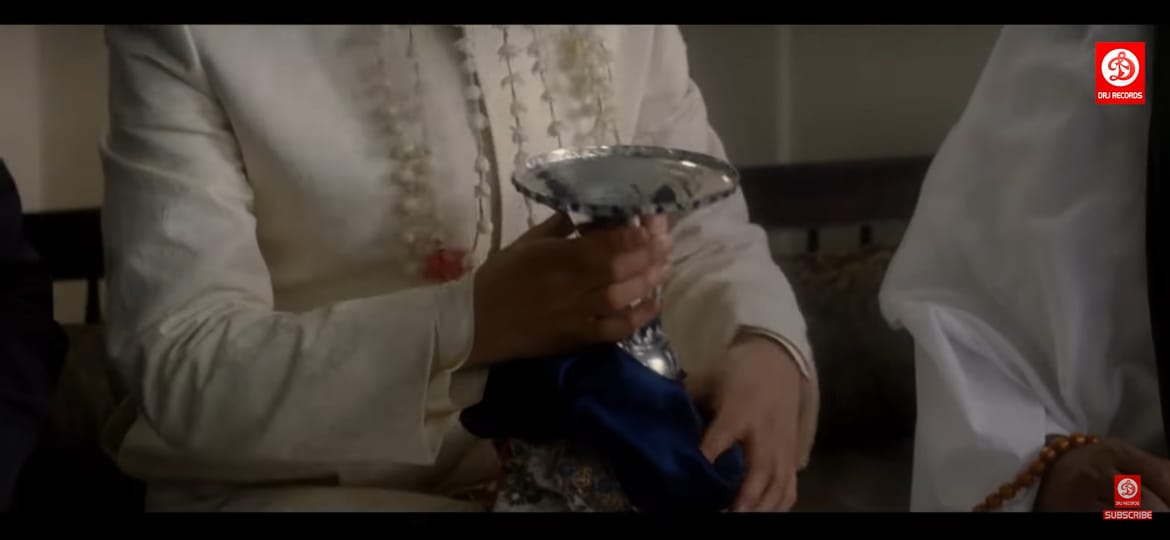
The Silver Spittoon :-
In the movie the symbol of spittoon is described very well. It may be used three times.
The silver spittoon given to Amina as part of her dowry by the Rani of Cooch Naheen is responsible for Saleem’s loss of memory. Even when he has amnesia, however, Saleem continues to cherish the spittoon as if he still understands its historical value. Following the destruction of his family, the silver spittoon is the only tangible remnant of Saleem’s former life, and yet it too is eventually destroyed when Saleem’s house in the ghetto is torn down. Spittoons, once used as part of a cherished game for both old and young, gradually fell out of use: the old men no longer spit their betel juice into the street as they tell stories, nor do the children dart in between the streams as they listen. The spittoon is the symbol of a vanishing era, which, in retrospect, seemed simpler and easier. And so, although Saleem may not be able to recall the specific association between the spittoon and his family, the spittoon maintains its symbolic quality as both a container of memory and source of amnesia.
Nose :-
Saleem Sinai’s large, bulbous nose is a symbol of his power as the leader of the Midnight Children’s Conference, which is comprised of all children born on the moment of India’s independence from British rule. His nose makes his power of telepathy possible, and this is how he communicates with the other children of midnight (who all have varied powers of their own). Saleem inherits his rather large, and perpetually congested, nose from his grandfather, Aadam Aziz, who also uses his nose to sniff out trouble. Saleem’s nasal powers begin after an accident in his mother’s washing-chest, in which he sniffs a rogue pajama string up his nose, resulting in a deafening sneeze and the instant arrival of the voices in his head. Saleem’s power of telepathy remains until a sinus surgery clears out his nose “goo.” After his surgery, Saleem is unable to further commune with the other children. Ironically, after Saleem’s nasal congestion is gone, he gains the ability to smell emotions, and he spends much time categorizing all the smells he frequently encounters.
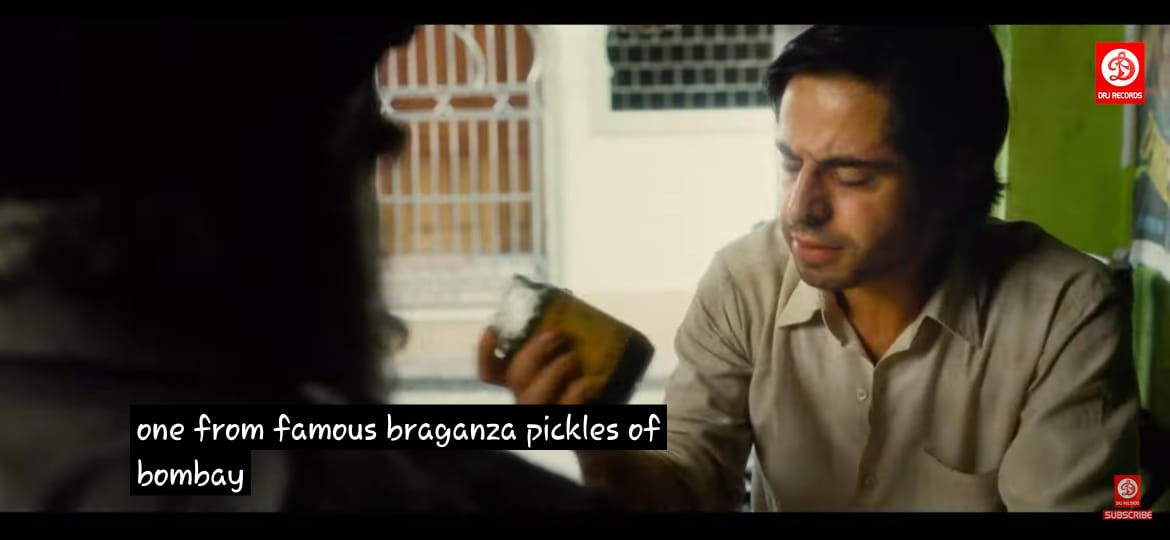
Pickle :-
Pickles are repeatedly mentioned in Midnight’s Children, and while they are often viewed as a phallic symbol, they are generally representative of the power of preservation within Rushdie’s novel. Saleem is the manager of a pickle factory, and he preserves pickles and chutneys each day. He also attempts to preserve his own life story like the pickles in his factory. Saleem largely manages to preserve his life through storytelling, offering a bit of immortality to a dying man, and he also labels and stores each chapter he writes in a pickle jar, so that they may be read later, by his son for example. This connection between pickles and the preservation of stories endures until the very end of the book, when Saleem ceremoniously labels his very last pickle jar as a way of closing out his story and his life as a whole.
The Perforated Sheet :-
In the movie we have seen two times The perforated sheet through which Aadam Aziz falls in love with his future wife performs several different symbolic functions throughout the novel. Unable to see his future wife as a whole, Aadam falls in love with her in pieces. As a result, their love never has a cohesive unity that holds them together. Their love is fragmented, just as their daughter Amina’s attempts to fall in love with her husband are also fragmented. Haunted by the memory of her previous husband, Amina embarks on a campaign to fall in love with her new husband in sections, just as her father once fell in love with her mother. Despite her best attempts, Amina and Ahmed’s love also lacks the completion and unity necessary for genuine love to thrive. The hole of the perforated sheet represents a portal for vision but also a void that goes unfilled. The perforated sheet makes one final appearance with Jamila Singer: in an attempt to preserve her purity, she shrouds herself completely, except for a single hole for her lips. The perforated sheet, in addition to preserving her purity, also reduces to her to nothing more than a voice. The sheet becomes a veil that separates her from the rest of the world and reflects her inability to accept affection.
Q. 4. The texture of the novel (What is the texture of the novel? Well, it is the interconnectedness of narrative technique with the theme. Is it well captured?)
Answer :-
‘ Midnight’s children’ consist the theme like
The Single and the Many
The Unreliability of Memory and Narrative
Destruction vs. Creation
.
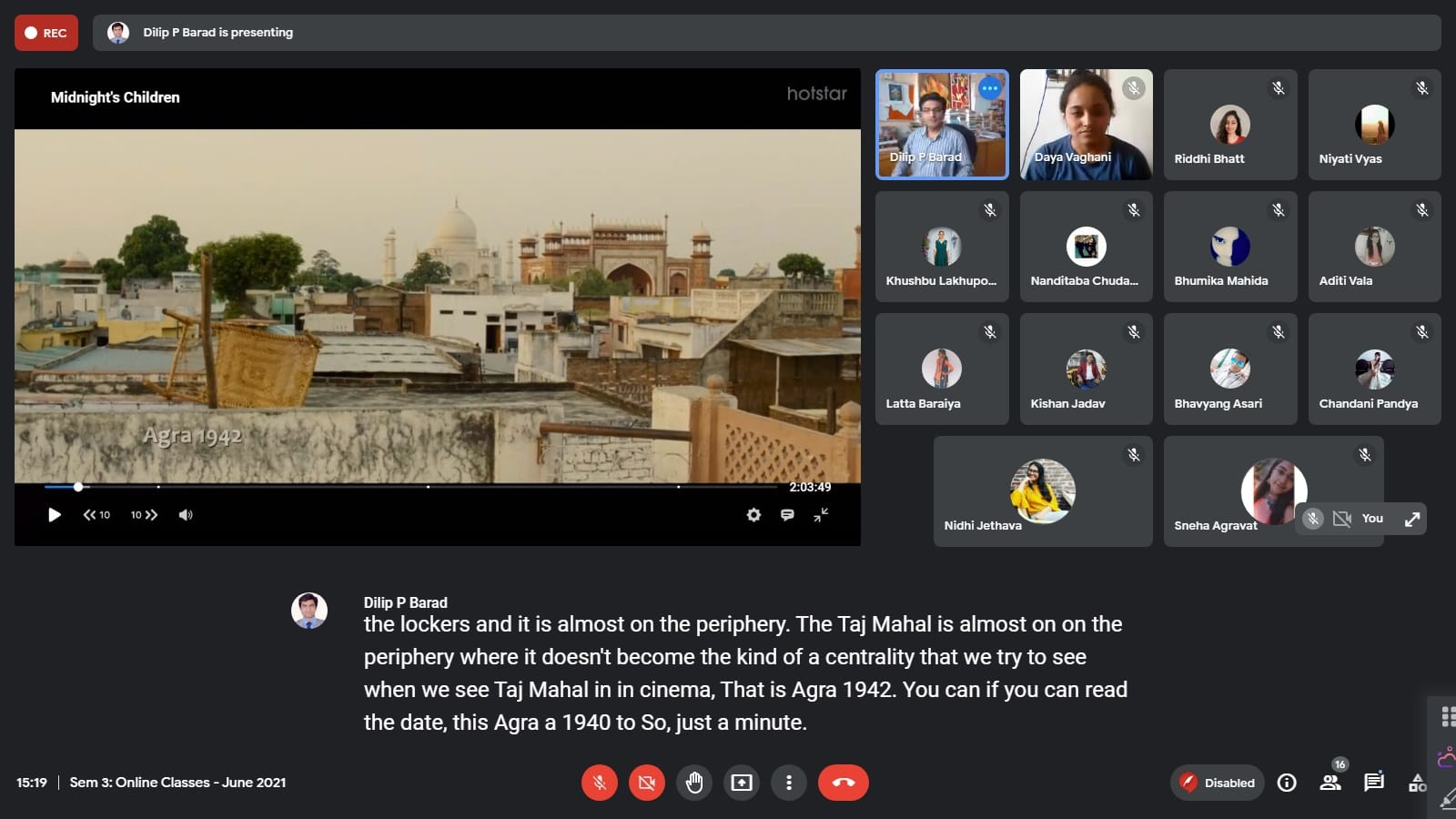
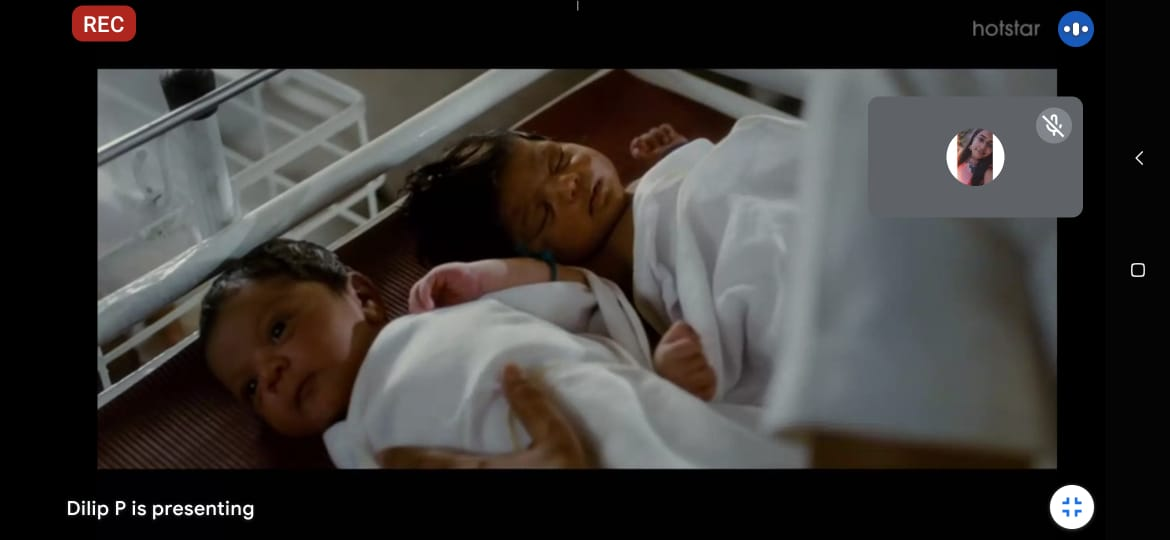
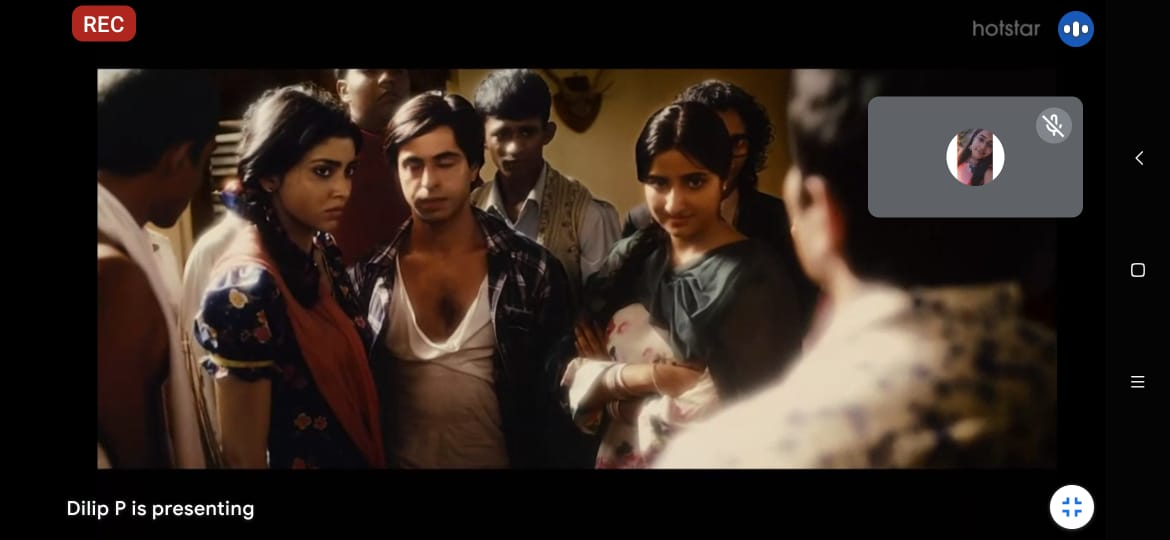
Looking at these screenshots we can eveluate texuality. The film adaptation tries to compute the theme and whole idea as it is.
Q. 5. What is your aesthetic experience after watching the screening?
Answer :-
From the ancient time our Indian aesthetics talk about Rasa and Bhava. It was Bharatmuni who established this Nataka and later on it will be developed like anything. In ‘ Natya Shastra’ Barat muni talks about ‘ Rasa Theory’. According to Bharat muni for Rasa realisation bhava is important
And he have maxim
विभावानुभावव्यभिचारिसंयोगाद्रसनिष्पत्ति
In the same way, while I was watching the movie, I found I was part of that movie. When I was watching the rasa nishpatti was awesome and I feel like Saleem told his story to me. My character totally assimilated with Saleem’s narration.