Hello everyone !
Compare Jane Eyre and Wide Sargasso Sea and Character of Antoinette and Jane Eyre.
Answer :
Introduction :-
Antoinette and Jane are characters from the two separate novels. Jane is the character of Novel Jane Eyre by Charlotte Bronte and Antoinette is the character from the prequel of Jane Eyre “ Wide Sargasso Sea” by Jean Rhy.
So let’s briefly discuss both the novels.
Charlotte Bronte :
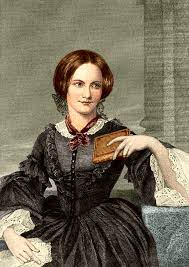
Charlotte Brontë was born on April 21, 1816, in Thornton, England. One of six children, she grew up in the nearby village of Haworth, where her father, the Rev. Patrick Brontë, became the curate of the local church in 1820. Her mother died of cancer the following year. In 1824, Charlotte and three of her four sisters were sent to the Clergy Daughters’ School in Lancashire, where her two older sisters died of tuberculosis. Soon after, Charlotte and her sister Emily returned to Haworth.
Back at Haworth, Patrick Brontë took over the tutelage of his four surviving children, giving them access to his well-stocked library. During this time, Charlotte, Emily, their sister Anne, and their brother Branwell produced a family magazine featuring their poems and stories. This period of Charlotte’s childhood, from 1829 to 1831, was her most prolific as a poet, and her work demonstrates her growing interest in literary history and her aspirations to be included in the canon.
In 1831, Charlotte enrolled as a student at Roe Head School, and she went on to serve as a governess there and elsewhere. She also briefly studied and taught in Brussels before returning to Haworth in 1844.
Jean Rhy
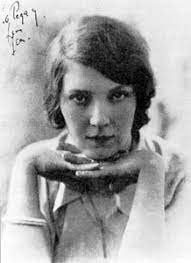
Jean Rhys, original name Ella Gwendolen Rees Williams, (born August 24, 1890, Roseau, Dominica, Windward Islands, West Indies—died May 14, 1979, Exeter, Devon, England), West Indian novelist who earned acclaim for her early works set in the bohemian world of Europe in the 1920s and ’30s but who stopped writing for nearly three decades, until she wrote a successful novel set in the West Indies.
The daughter of a Welsh doctor and a Creole mother, Rhys lived and was educated in Dominica until she went to London at the age of 16 and worked as an actress before moving to Paris. There she was encouraged to write by the English novelist Ford Madox Ford. Her first book, a collection of short stories, The Left Bank (1927), was followed by such novels as Postures (1928), After Leaving Mr. Mackenzie (1931), Voyage in the Dark (1934), and Good Morning, Midnight (1939).
Jane Eyre
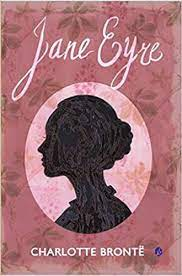
Jane Eyre, novel by Charlotte Brontë, first published in 1847 as Jane Eyre: An Autobiography, with Currer Bell (Brontë’s pseudonym) listed as the editor. Widely considered a classic, it gave new truthfulness to the Victorian novel with its realistic portrayal of the inner life of a woman, noting her struggles with her natural desires and social condition.
Wide Sargasso Sea

Wide Sargasso Sea is a visceral response to Charlotte Brontë’s treatment of Mr Rochester’s ‘mad’ first wife, Bertha, in her classic Victorian novel Jane Eyre. Jean Rhys reveals the horrifying reality that might lie behind a man’s claim that a woman is mad, and humanises Brontë’s grotesque invention, the now-archetypal and heavily symbolic ‘madwoman in the attic’. The novel is a vindicating howl of rage and injustice, and a skin-flaying revelation of personal sadism.
Characters Sketch of Jane in ‘Jane Eyre’.
Jane Eyre is a dynamic character as throughout the novel she changes her decisions and ideas according to the situations she faces. Jane’s action and decision making in the novel demonstrates the growth in her maturity from a rude willful child to an ambitious young lady.
Jane Eyre does not perform a lot of heroic deeds, and she does not have a lot of qualities that would consider her to be a heroine today. Nevertheless, she is a heroine just because she became an independent, strong and educated individual at the age when women were under the authority of men.The character of Jane Eyre evolves and changes even as an actual woman would throughout the course of her life. Jane Eyre becomes self-sufficient; firstly as a governess, and then as the headmistress of her school and lastly as a wealthy woman by her inheritance.
Jane does grow in the book Jane Eyre. The theme of the book is Jane’s continual quest for love. Jane searches for acceptance through the five settings where she lives: Gateshead, Lowood, Thornfield, Moor House and Ferndean. Through these the maturation and self-recognition of Jane becomes traceable. It is not until she runs from Rochester and Thornfield that she realizes what she really wants. Jane is able to return to Rochester finally independent, with a desire to love, as well as be loved.
Fictional characters succeed or fail in Jane Eyre is described as plain rather than beautiful. Would the plot of the novel still make sense if Jane were beautiful? How would the story be different if Jane were not poor? Why does it matter? Jane Eyre’s life is not one that most anyone would want. She is poorly treated and repeatedly plagued and oppressed. Since in the story she is described as plain and poor, if she were exquisitely gorgeous or had thousands of dollars, the meaning of the story would change. She would not feel stressed or worried, she would not have to deal with tormentors and her life would generally be much better. She would also be happier and would encounter occurrences much differently.
Jane has a passionate nature; and, when she falls under the spell of Mr. Rochester’s magnetic personality, she becomes deeply devoted to him. Her love for him is so intense that he seems to her to be the most handsome man, even though he is, by his appearance, one of the most unattractive males. Here she aptly says to herself that beauty lies in the eyes of the gazer or the beholder. She finds Mr. Rochester to be a fascinating man, and her love for him becomes profound. Here we also perceive Jane’s unconventional attitude to life, not only because she has fallen in love with a physically unattractive man but because she has fallen in love with a man who is twice her age. Her love for him is not a passing fancy as would have been the case with a girl of a superficial nature. Her love has an abiding quality, and it continues even after she leaves Thornfield Hall and forsakes Mr. Rochester under the compulsions of her conscience. Eventually, of course, she is united with him, and finds perfect bliss in her conjugal life with him.
Jane has a strong sense of her dignity, and this sense of her own dignity actually shows her sense of the dignity of her sex. This sense of the dignity of her sex shows that she does not regard woman as a commodity whom a man can acquire by his status or wealth. Here is voice of Jane charged with strong piece of feminism:
“Do you think I am an automaton? — a machine without feelings? and can bear to have my morsel of bread snatched from my lips, and my drop of living water dashed from my cup? Do you think, because I am poor, obscure, plain, and little, I am soulless and heartless? You think wrong! — I have as much soul as you — and full as much heart! And if God had gifted me with some beauty and much wealth, I should have made it as hard for you to leave me, as it is now for me to leave you. I am not talking to you now through the medium of custom, conventionalities, nor even of mortal flesh: it is my spirit that addresses your spirit; just as if both had passed through the grave, and we stood at God’s feet, equal — as we are!”
When Mr. Rochester urges her not to forsake him but to live with him as his companion or his mistress, she declines this proposal and quits Thornfield Hall even though she has not ceased to love Mr. Rochester. In taking this step, she appears to us as an upholder the dignity of her sex and as a champion of the rights of women.
Jane is basically a sympathetic person. In fact, she is large-hearted generous. Her friendship with Helen Burns at Lowood School is based on her sympathy for that girl who is the very embodiment of piety and humility. The manner in which Jane distributes her legacy of twenty thousand pounds equally among her three cousins and herself, shows her generosity as well as her desire for family affections and attachments.
Jane goes through the vicissitudes of her life with great courage and fortitude. An ordinary girl would have given way to despair, and would have sunk beneath the weight of her misfortunes. An ordinary girl would certainly have succumbed to the temptation of living with Mr. Rochester as his mistress or subsequently, have agreed to marry St. John in order to lead a financially viable, if not prosperous, life. But she gives evidence of her extraordinary powers of endurance under all circumstances. She proves herself to be an enterprising girl capable of taking initiatives.
Character Sketch of Anoittee :
Antoinette Cosway Mason in Jean Rhys’s Wide Sargasso Sea (1966), whom her English husband later calls Bertha—the name of a mad white Creole woman in Jane Eyre—has been a focus of discussion of Rhys’s novel, particularly regarding her madness and its implications of feminism and (post)colonialism. However, although largely neglected, depicting the post-emancipation British West Indies around the 1830s, Rhys represents various forms of physical and mental symptoms of madness, expressed not just by the white Creole woman but also by two important groups—white male colonizers and African Caribbeans. By focusing on the under-examined symptoms of madness, I will analyze how they reveal changing socioeconomic systems and the continuity of exploitation after emancipation. This reading also suggests how Rhys’s novel about the 1830s West Indies reflects her own madness/anger about her contemporary post-colonial world of the mid-twentieth century.
The main character or the protagonist in this novel is Antoinette. It is because Antoinette‘s way of thinking is described more by the author in the novel. The author describes all the scenes that Antoinette has been through in detail. The characters that Antoinette has also stand out more than those of the rest of the characters inside of the story. Antoinette is also a round character because her traits are gradually changing from a good-obedient-quiet girl into a gloomy-insane woman. Antoinette‘s
characters are changing because of some important turning points in her life.
At first, Antoinette is a good-obedient-quiet creole girl. For the creole issue, it can be proven by her being born in Jamaica, Caribbean Island, of white parents. She has the appearance of a white girl who has white skin. It can be seen from the scene when she is called a white cockroach. It is a mock directed to the whites who were born in Jamaica, ―They called us white cockroaches‖ (Rhys, 1966: 20). In her way of speaking, it can be seen that she speaks English well or there is no Jamaican influence on her English. It is because Antoinette is a well-educated woman that she does not speak a creole language or a mixed language of English and Jamaican.
Antoinette is a white Creole woman living in nineteenth century, British-owned Jamaica after the emancipation of slaves. She and her mother represent the white minority on the island and are despised by black Jamaicans because of their family’s background as slave owners. Since early childhood, Antoinette’s family was ridiculed and tormented by the people around them: “I never looked at any strange negro. They hated us, they called us white cockroaches. Let sleeping
dogs lie” (13). Simultaneously, it is implied that the differences between the English and the Creoles were considered “racial as well as cultural” (Raiskin, 39): “[Edward's 4 narration:] Long, sad, dark alien eyes. Creole of pure English descent she may be, but they are not English or
European either” (Rhys, 39). Thus, Antoinette and her mother were “white niggers” who belonged neither to Jamaican nor English culture, but instead were trapped in between: “And I’ve heard English women call us white niggers. So between you I often wonder who I am and where is my country and where do I belong and why was I ever born at all” (61). In the midst of two different cultures and nations Antoinette cannot find any place of her own.
Antoinette is a good girl. She wants to see her mother happy. When her mother feels so sad with the neglected condition of Coulibri Estate after the death of the father, in a child‘s way, she tries to comfort her mother by smoothing the frown in her forehead: ―I hated this frown and once I touched her forehead trying to smooth
it‖(Rhys, 1966: 18). Antoinette also tries to console her mother who is in deep grief after the death of Pierre, Antoinette‘s younger, crippled brother, when Coulibri Estate, their house, is burnt. Antoinette approaches her mother and tries to embrace her: ― ̳But I am here, I am here,‘ I said‖ (Rhys, 1966: 44). She hopes that her presence will reduce her mother‘s grief.
Antoinette is an obedient girl. She agrees without showing her emotion when her step father, Mr. Mason, plans to marry her with an Englishman. Although Antoinette does not know her future husband she agrees with this arranged marriage: ―It may have been the way he smiled, but again a feeling of dismay, sadness, loss, almost choked me. This time I did not let him see it‖ (Rhys, 1966: 54). She does not want to make a fuss. She prefers to make other people happy than thinking about her
own feeling or benefit.
―It may have been the way he smiled, but again a feeling of dismay, sadness, loss, almost choked me. This time I did not let him see it‖ (Rhys, 1966: 54). She does not want to make a fuss. She prefers to make other people happy than thinking about her
own feeling or benefit. Antoinette is also a quiet girl. This character can be seen when she sees obeah practice for the first time. She feels afraid and wants to tell how scary obeah is to Mr.
Mason. However, she chooses not to tell him because she knows that Mr. Mason will laugh at her and think that she is ridiculous, ―Mr Mason would laugh if he knew how frightened I had been‖ (Rhys, 1966: 28).
After she gets married, her character begins to change due to several causes. At first, her English husband is nice to her: ―She looked at me and I took her in my arms and kissed her‖ (Rhys, 1966: 71). However, after he hears several evil rumors about
her, his attitude changes. This makes Antoinette become a gloomy woman that always has negative emotions and points of view. She feels tortured and thinks of many bad possibilities that will happen when her husband begins to lose his interest in her. She
even commits unexpected action in her distress. This can be seen in her husband‘s description of her startling action: ―... when I felt her teeth in my arm I dropped the bottle ....‖ (Rhys, 1966: 134). She bites her husband‘s arm in her extreme anxiety.
Character Evaluation of Jane and Berta ( Antoinette)
In Charlotte Bronte’s Jane Eyre Bertha Mason and Jane Eyre share various attributes in their characters: passion, restlessness, and a will to follow their nature. Later in the novel, Jane sees Bertha’s burning passionate nature and it warns her that she will only become the maniac that Bertha has if she follows her passion and her temptation for her one love, Mr. Rochester. In this way, Bertha and Jane serve as doubles for one another how are described with passion and fire, how their moods are reflected through nature, and how Bertha serves as a warning for what Jane’s passion, like Bertha’s own, could become.
The character of Bertha Mason has been fully explored only in the counter narrative by Jean Rhys, a half Creole and half Welsh writer, in her book, ‘Wide Sargasso Sea’. Here, the narrative is wrested away from Jane and given to Bertha, finally giving her a voice. Bertha’s name in the book is Antoinette Cosway, which is changed to Bertha Mason by Rochester to sound more Anglicized, thus stripping away at a part of her identity. Written as a prequel to Jane Eyre, Wide Sargasso Sea shows how Bertha and Rochester both married each other under false pretexts and how marital frustration culminates, following a dark and disturbing future life for Bertha in England.
Bertha Mason is described as the violent and insane ex-wife of Rochester, although she has not been allowed to give us an account of her madness. All we learn about Bertha is either through Rochester’s description of her madness, or Jane’s biased (because she is the leading lady and in love with Rochester) perception of her.
Even in death, Bertha is seeking only emancipation that has been snatched away from her by locking her up in the attic. She jumps off the house, openly affirming her identity – one last time. Bertha, through her suicide, rejects the confinement that she had been subjected to. She yearns for emancipation, which she can attain only through death, which she embraces, inverting all the previous scenes of confinement, reasserting her existence in a public spectacle, rejecting Rochester’s charity as well.
For Jane’s love to culminate and the plot to pace up, it’s important for Bertha to die. Bertha’s death increases the mystery even more. She dies without telling the readers anything about her suffering. (Note: While Bertha gains emancipation only through death, Jane, being the protagonist, gains it from a relationship with mutual dependence.)
Throughout the book, Jane is described even from when she was a young girl as “such a picture of passion” (p.12). Being passionate in the Victorian Era was associated with not being pleasant and useful, these attributes were looked for to be married which was the ultimate goal of any Victorian woman.
But Jane was trying to escape the typical Victorian women’s life, which is why she did not conceal her passion. “I have seen what a fire-spirit you can be when you are indignant. You glowed in the cool moonlight last night.” (p.392), Rochester describes her. Her passion for Rochester is so strong that it takes over her mind and makes her go insane as she says, “‘I am insane–quite insane’ with my veins running fire, and my heart beating faster than I can count its throbs.” (p.475)
This passion made her become “more restless than ever…I could not sit still, nor even remain in the house…”(p.414) Jane’s fiery passion led her to the insanity of which she could not. It was her nature of which she says should not be kept all bottled up inside a woman, “they need to exercise for their faculties, and field for their efforts as much as their brother’s do.” (p.115) So Jane exercised her passionate nature for everyone to notice.
Alike to Jane, Bertha has a passionate nature too. At Jane’s first sight her appearance was described as “the fiery eye glared upon me-she thrust up her candle close to my face…I was aware of her lurid visage flamed over mine…”(p.425) Bertha is described with the same fire as Jane is. Bertha’s passion has affected her in worse ways than Jane’s has.
Bertha’s passion leads her to such insanity that she has fits and tantrums like when she bit her brother, Mason. Rochester describes Bertha: “on all fours, it snatched and growled like some strange wild animal…”(p.425), “a fanatic with burning eternity” (p.461). She is a maniac because she cannot control her fitful passion like Jane refuses to keep her passion inside of her. Their natures are full of passion and fire, which they allow the whole world to see flaming.
Nature reflects Jane and Bertha’s moods. Because they reveal their own nature it is reflected through the nature in the settings of the novel, unlike any of the other women in the book. When Jane is overcome with happiness the day after Rochester confesses his love for her the weather is depicted as “A brilliant June morning had succeeded to the tempest of the night…Nature must be gladsome when I was so happy.”(p.384)
his also occurs when Jane’s feeling of passion for Rochester takes over her actions making her very restless, her passion is described by the nature around her, “loud as the wind blew, near and deep as the thunder crashed, fierce and frequent as the lightning gleamed, cataract-like as the rain fell during a storm of two hours’ duration.”(p.383). As Jane’s passion was described with fierce thunder and rain, so is Bertha’s. As Rochester discovers Bertha’s passion is leading her to madness “the storm broke, streamed, thundered, blazed…”(p.462)
Both of their passions through nature are depicted as fierce and damaging. Though both natures described in this way Jane doesn’t become mad and violent as Bertha does, she sees herself in Bertha and knows she must leave what has been giving her this fiery passion, her love Mr. Rochester.
Bertha’s madness serves as a warning for Jane’s developing passion. Jane says, “I could not help it: the restlessness was in my nature; it agitated me to pain sometimes.”(p.114) As it was in both of their natures, but Jane knew she must resist the temptations of her passion before she became insane as Bertha was.
Conclusion
Emily Montegut, a critic, has expressed the view that Jane Eyre, Rochester, and St. John River‘s are three characters drawn from human nature at its grandest. Superior to her sorry outward appearance, superior to her humiliating situation, and superior to the blows of fate, Jane is one of those women who are equal to all the vicissitudes of life. She loves only strength, energy, and freedom. Another critic describes Jane as one of the most unforgettable heroines of all times, adding that she is a penniless orphan of sharp wit and independent spirit, although outwardly of plain appearance.
In brief Antoinette Cosway is a creole, or person of European descent born in the Caribbean. Throughout the novel, her relationships with others are marked by alienation, exclusion, and cruelty, so that she consistently seeks solace in the natural world. She watches her family home burned to the ground by a mob of disenfranchised former slaves, and witnesses her mother’s descent into madness as a result. She is married to an Englishman she barely knows, for his financial benefit. After a disastrous honeymoon, her husband finally locks her away in his attic, from which her only escape is suicide.
Thank you..