Thursday, 11 February 2021

Assignment: 103Robert Burns and Thomas Gray


Name : Nidhi P. Jethava

Paper : Literature of Noe-classical Period.

Roll No – 14

Enrollment no. -306920200009

Email id – jethavanidhi8@gmail.com

Batch – 2020-22 ( MA SEM-1)

Submitted to – S.B. Gardi Department of English, Maharaja Krishnakumarsinhji Bhavnagar University


 Robert Burns and Thomas Gray as a Transitional Poet :


Answer :


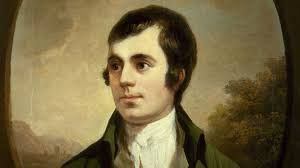
ROBERT BORNS :-


 Robert Burns, (born January 25, 1759, Alloway, Ayrshire, Scotland—died July 21, 1796, Dumfries, Dumfriesshire), national poet of Scotland, who wrote lyrics and songs in Scots and in English. He was also famous for his amours and his rebellion against orthodox religion and morality.


Life

Robert Burns (25 January 1759 – 21 July 1796), also known familiarly as Rabbie Burns, the National Bard, Bard of Ayrshire and the Ploughman Poet and various other names and epithets, was a Scottish poet and lyricist. He is widely regarded as the national poet of Scotland and is celebrated worldwide. He is the best known of the poets who have written in the Scots language, although much of his writing is in English and a light Scots dialect, accessible to an audience beyond Scotland. He also wrote in standard English, and in these writings his political or civil commentary is often at its bluntest.


He is regarded as a pioneer of the Romantic movement, and after his death he became a great source of inspiration to the founders of both liberalism and socialism, and a cultural icon in Scotland and among the Scottish diaspora around the world. Celebration of his life and work became almost a national charismatic cult during the 19th and 20th centuries, and his influence has long been strong on Scottish literature. In 2009 he was chosen as the greatest Scot by the Scottish public in a vote run by Scottish television channel STV.


As well as making original compositions, Burns also collected folk songs from across Scotland, often revising or adapting them. His poem (and song) "Auld Lang Syne" is often sung at Hogmanay (the last day of the year), and "Scots Wha Hae" served for a long time as an unofficial national anthem of the country. Other poems and songs of Burns that remain well known across the world today include "A Red, Red Rose", "A Man's a Man for A' That", "To a Louse", "To a Mouse", "The Battle of Sherramuir", "Tam o' Shanter" and "Ae Fond Kiss".


ROBERT BURNS AS A POET OF TRANSITIONAL AGE :


Burns developed rapidly throughout 1784 and 1785 as an “occasional” poet who more and more turned to verse to express his emotions of love, friendship, or amusement or his ironical contemplation of the social scene. But these were not spontaneous effusions by an almost illiterate peasant. Burns was a conscious craftsman; his entries in the commonplace book that he had begun in 1783 reveal that from the beginning he was interested in the technical problems of versification.


Though he wrote poetry for his own amusement and that of his friends, Burns remained restless and dissatisfied. He won the reputation of being a dangerous rebel against orthodox religion, and, when in 1786 he fell in love with Jean Armour, her father refused to allow her to marry Burns even though a child was on the way and under Scots law mutual consent followed by consummation constituted a legal marriage. Jean was persuaded by her father to go back on her promise. Robert, hurt and enraged, took up with another woman, Mary Campbell, who died soon after. On September 3 Jean bore him twins out of wedlock.


Meanwhile, the farm was not prospering, and Burns, harassed by insoluble problems, thought of emigrating. But he first wanted to show his country what he could do. In the midst of his troubles he went ahead with his plans for publishing a volume of his poems at the nearby town of Kilmarnock. It was entitled Poems, Chiefly in the Scottish Dialect and appeared on July 31, 1786. Its success was immediate and overwhelming. Simple country folk and sophisticated Edinburgh critics alike hailed it, and the upshot was that Burns set out for Edinburgh on November 27, 1786, to be lionized, patronized, and showered with well-meant but dangerous advice.

The Kilmarnock volume was a remarkable mixture. It included a handful of first-rate Scots poems: “The Twa Dogs,” “Scotch Drink,” “The Holy Fair,” “An Address to the Deil,” “The Death and Dying Words of Poor Maillie,” “To a Mouse,” “To a Louse,” and some others, including a number of verse letters addressed to various friends. There were also a few Scots poems in which he was unable to sustain his inspiration or that are spoiled by a confused purpose. In addition, there were six gloomy and histrionic poems in English, four songs, of which only one, “It Was Upon a Lammas Night,” showed promise of his future greatness as a song writer, and what to contemporary reviewers seemed the stars of the volume, “The Cotter’s Saturday Night” and “To a Mountain Daisy.”


Burns selected his Kilmarnock poems with care: he was anxious to impress a genteel Edinburgh audience. In his preface he played up to contemporary sentimental views about the “natural man” and the “noble peasant,” exaggerated his lack of education, pretended to a lack of natural resources, and in general acted a part. The trouble was that he was only half acting. He was uncertain enough about the genteel tradition to accept much of it at its face value, and though, to his ultimate glory, he kept returning to what his own instincts told him was the true path for him to follow, far too many of his poems are marred by a naïve and sentimental moralizing.


Legacy Of Robert Burns :


Burns was a man of great intellectual energy and force of character who, in a class-ridden society, never found an environment in which he could fully exercise his personality. It may be argued that Scottish culture in his day was incapable of providing an intellectual background that could replace the Calvinism that Burns rejected, or that Burns’s talent was squandered on an Edinburgh literati that, according to English critics, were second-raters. Yet he lived during the cultural and intellectual tumult known as the Scottish Enlightenment, and the problem was ultimately more than one of personalities. The only substitute for the rejected Calvinism seemed to be, for Burns, a sentimental Deism, a facile belief in the good heart as all, and this was arguably not a creed rich or complex enough to nourish great poetry. That Burns in spite of this produced so much fine poetry shows the strength of his unique genius, and that he has become the Scottish national poet is a tribute to his hold on the popular imagination.


Burns perhaps exhibited his greatest poetic powers in his satires. There is also a remarkable craftsmanship in his verse letters, which display a most adroit counterpointing of the colloquial and the formal. But it is by his songs that Burns is best known, and it is his songs that have carried his reputation round the world.


Burns wrote all his songs to known tunes, sometimes writing several sets of words to the same air in an endeavour to find the most apt poem for a given melody. Many songs which, it is clear from a variety of evidence, must have been substantially written by Burns he never claimed as his. He never claimed “Auld Lang Syne,” for example, which he described simply as an old fragment he had discovered, but the song we have is almost certainly his, though the chorus and probably the first stanza are old. (Burns wrote it for a simple and moving old air that is not the tune to which it is now sung, as Thomson set it to another tune.) The full extent of Burns’s work on Scottish song will probably never be known.


It is positively miraculous that Burns was able to enter into the spirit of older folk song and re-create, out of an old chorus, such songs as “I’m O’er Young to Marry Yet,” “Green Grow the Rashes, O,” and a host of others. It is this uncanny ability to speak with the great anonymous voice of the Scottish people that explains the special feeling that Burns arouses, feelings that manifest themselves in the “Burns cult.”


Thomas Gray :-


homas Gray (26 December 1716 – 30 July 1771) was an English poet, letter-writer, classical scholar, and professor at Pembroke CollegeCambridge. He is widely known for his Elegy Written in a Country Churchyard, published in 1751.


Gray was an extremely self-critical writer who published only 13 poems in his lifetime, despite being very popular. He was even offered the position of Poet Laureate in 1757, though he declined. His writing is conventionally considered to be pre-Romantic but recent critical developments deny such teleological classification.


 Thomas Gray as a poet :-


Born in 1716 in London, Thomas Gray was a poet and professor who is perhaps most well-known for the poem Elegy Written in a Country Churchyard that was inspired by the sudden passing of his poet friend Richard West. Gray was from a large family of 12 but was the only one to survive, his father suffered from mental illness, and he spent most of his youth with his mother.


Gray attended Eton, was a devout scholar who wasn’t interested in sport but found a deep joy in studying science and botany in particular. 1734 saw him in Cambridge, although he didn’t much care for the studies, preferring to spend his time reading and playing music. It was there that he made friends with Horace Walpole who would later help him get published.


After the death of his friend and poet Richard West, Gray began to write poetry in earnest, and he would spend a good deal of the rest of his life living the life of a scholar at Cambridge, his head buried in a book. He was often regarded in that respect as one of the highest intellectuals in the country. Although not particularly productive, he was offered, and turned down, the post of poet laureate in 1757.


Because of the morose nature of some of his poetry, Gray, along with other poets, including Cowper and Goldsmith, became known as one of the Graveyard Poets or Boneyard Boys. He started writing Elegy Written in a Country Churchyard in 1742 but left it unfinished for a number of years before completing it in 1750. When it was published a year later it was instantly successful and has been one of the staples of poetry classic collections ever since.


 Exploring death and what happens after, Elegy was a precursor of the Gothic era and follows a poet narrator who is sitting in a graveyard, initially describing the surroundings and then turning to deeper thoughts of mortality and the inevitable fate that we all face. The influence of Gray’s work, particularly Elegy, can be seen both in the 19th Century and well into more modern times.


Although he is best remembered for that poem alone, Gray actually considered The Progress of Poesy and The Bard amongst his best work. Throughout his life, he liked to travel through the British countryside exploring its ancient history and bringing it to life in his poetry. When he toured the English lakes he produced his descriptions in the collection The Poems of Mr Gray in 1775. Scholars have wondered over the last two hundred years or so why Gray never actually wrote more works, even though he was considered the premier poet of the time amongst his contemporaries.


In 1768, Gray’s scholastic endeavors led to him being offered the post of professor of modern history at Cambridge, a position that he held for just three years. In 1771, he fell ill whilst at a dinner at the college and died a week later at the age of 30. He was buried in the graveyard at Stoke Poges where he first began to write the Elegy.

 Citation :-

Albert, Edward. History of English Literatutre. Ed. J.A. Stone. New Delhi, 1997.

Hudson, William Henry, Gray & his poetry, Norwood, Pa.: Norwood Editions, 1977.

Long, William J. English Literature. Delhi: AITBS PUBLISHERS,INDIA, 2019.

Roberts, S. C. (Sydney Castle), Thomas Gray of Pembroke, Norwood, Pa.: Norwood Editions, 1978.

Thomas Gray, his life and works, London; Boston: G. Allen & Unwin, 1980.


 Words : 2021

Character : 11,664

Sentence : 84

Paragraph : 39


Wednesday, 10 February 2021

Assignment: 102William Wordsworth and Coleridge

  Name : Nidhi P. Jethava

Paper : Literature of Romantics

Roll No – 14

Enrollment no. -306920200009

Email id – jethavanidhi8@gmail.com

Batch – 2020-22 ( MA SEM-1)

Submitted to – S.B. Gardi Department of English, Maharaja Krishnakumarsinhji Bhavnagar University


 Q. Compare and contrast William Wordsworth and S.T. Coleridge.


Ans.


William Wordsworth :-


It was in 1797 that the new romantic movement in our literature assumed definite form. Wordsworth and Coleridge retired to the Quantock Hills, Somerset, and there formed the deliberate purpose to make literature “adapted to interest mankind permanently,” which, they declared classic poetry could never do. Helping the two poets was Wordsworth’s sister Dorothy, with a woman’s lover for flowers and all beautiful things, and a woman’s divine sympathy for human life even in its lowliest forms. Though a silent partner, she furnished perhaps the largest share of the inspiration which resulted in the famous LYRICAL BALLADS of 1798.


Brief life history :-


Wordsworth was born at Cockermouth, a town which is actually outside the lack District, but well within hail of it. His father, who paid for a claim on Lord Lonsdale, who refused outright to pay his debt, so that William had to depend on the generosity of two uncles, who paid for his schooling at Hawkshead, near Lake Windermere. Subsequently Wordsworth went to Cambridge, entering St John’s college in 1787. His work at the university was quite undistinguished, and having graduated in 1791 he left with no fixed career with no fixed career in view. After spending a few months London he crossed over to France(1791), and stayed at Orleans and Blois for nearly a year. An Enthusiasm for the Revolution was aroused in him; he himself has chronicled the mood in one of his happiest passages :


  Bliss was it in that dawn to be alive,

  But to be young was very heaven !


He Returned to Paris in 1792, just after the September massacres, and the sights and stories that greeted him there shook his faith in becoming a Girondin, or moderate Republican, but his allowance sister Dorothy (henceforward his lifelong companion) he settled in a little cottage in Dorset; then, having met Coleridge, they moved to Alfoxden, a house in Somersetshire, in order to live near him. It was there that the two poets took the series of walks the fruit of which was to be the Lyrical Ballads.


After a visiting to Germany in 1798-99 the Wordsworth settled in the Lack District, Which was to be their home for the future. In turn they occupied Dove cottage, at Town end, Gramere (1799), Allan Bank (1808), Grasmere parsonage(1811), and lastly the well-known residence of Rydal Mount, which was Wordsworth’s home from 1813 till his death. Shortly before he had moved to Rydal Mount he received the sinecure of Distributor of Stamps for Westmorland, and was put out of reach of poverty.


The remainder of his life was a model of domesticity: He was noteworthy, though it was injudicious, treasured every scrap of his poetry that they could lay their hands on. His great passion was for travelling.  He explored most of the accessible parts of the Continent, and visited Scotland several times. On the last occasion (1813) he and his daughter renewed their acquaintance with Scott at Abbotsford, and saw the great novelist when he was fast crumbing into mental ruin. Wordsworth’s poetry,  which at first had been received with derision or indifference, was now winning it’s way, and recognition was general. In 1839 Oxford conferred upon him the degree of D.C.L.; in 1842 the Crown awarded him a pension of £300 a year ; and on the death of Southey in 1843 he became poet Laureate.


BRIEF LIFE HISTORY OF S. T  COLRIDGE :


 Samuel Taylor Coleridge was born in Devonshire  and was the youngest of the thirteen  children of the vicar of Ottery Saint Mary. As a child He was usually precocious :” never thought as a child” he says “ I never had the language of a child” when was a nine-year-old his father died; he then  obtained a place  in Christ’s  hospital where he astonished  his schoolmates, one of whom was Charles lamb, with his queer tastes in reading and speculation. he went to Cambridge  (1791) where he was fired with the Revolutionary doctrines. He abandoned the university and enlisted in the light Dragoons,but a few month as a soldier handed his military career. in 1794 he returned to Cambridge, and later in the year become  acquainted at Oxford with Southey, with whom he planned the founding of an idea Republic in America. with Southey he lived for a space at a Bristol, and there he met Southey's   wife’s sister, whom he eventually married. At Bristol Coleridge lectured, wrote poetry, and issue a newspaper called The Watchmen (1796), all with idea of a converting humanity; yet in spite of all humanity remained unperturbed  in its original sin. At this time (1797) He met Wordsworth, and as has already been noticed, planned their joint product the lyrical ballads, which was published at Bristol.


Both poet as a critic.


Wordsworth’s  Theory of poetry:


 William Wordsworth was primarily a poet not a formal critic. He become a critic of a contemporary poetry out of sheer  necessity of his creative genius. He is  the first critic to turn  from the form  of poetry to its Substance. He is the first critic who build up a  theory of poetry and give an account of the nature of the creative process. His emphasis is on Novelty, experiment, Liberty, spontaneity, inspiration and imagination as contrasted with the classical emphasis on authority,  tradition and restraint. Rene Wellek states ;


“ Though Wordsworth left only a small body of Criticism, it is rich in suggestions ,anticipations and personal insights.”


    Wordsworth’s  ‘ Preface to Lyrical Ballads’ opens with a declaration that this volume was published as an experiment. His aim  in writing it is to demonstrate the need of writing a new kind of poems and to revaluate the poetry of the bygone period.


  First of all Wordsworth define who is a poet ? The poet is essentially a man talking to man. Differs from other man not in a nature, but merely in the degree of his gifts. He is a man of great imagination and greater power of communication. He can, therefore, comprehend truths  to which other remains blind. The poet is a more comprehensive soul who can transport his failing to others.


    Then Wordsworth prefers incidence and situation of a humble life on the themes of his poetry. Because in a rustic and humble life, one can easily study the fundamental passions  of human heart. More so the language should be the language used by simple rustic people so that one can express emotions lively. He does not consider metre essential to poetry. He regards it as merely  pleasure separated, but at the same time He allowed  its used while he checked the use of poetic diction, because it is artificial, capricious and lawless.


  According to Wordsworth, the use of metre adds to the charm and appeal to the to a poem. It controls the over excitement. The use of metre gives the Reader a sense of the skill of the poet in overcoming artistic difficulties. Wordsworth says :

    “ The metrical arrangement continues to give us continual all and regular impulses of pleasure surprise.”


  Thereafter Wordsworth discuss what is poetry ? and he defines.


“ poetry is the spontaneous overflow of powerful feelings it takes its origin from emotion  recollected in tranquility.”


There are four stages through which an experience passes and a successful composition takes place . First of all, there is the observation of some object, character or incidents with set up a powerful emotions in the mind of the poet. Secondly there is the recollection of that emotions in a tranquility. Thirdly the imagination of a memory by the poet set up emotion in the mind of itself.  The Fourth is that of composition.


  It should be noted here though “ spontaneous overflow of powerful feelings” and “emotional recollected in tranquility “are the very opposite to each other yet Wordsworth reconciles these two opposites.


Wordsworth tells about the function of poetry I.e. “ to produce excitement in coexistence with an over balance of pleasure.”


    Here he puts accent on pleasure but ‘ pleasure’  does not mean purely aesthetic one, but model too,  Which is much higher result from the realisation of truth. He calls poetry;


“ The most philosophical of all writings “

“ The beneath and finer spirit of all Knowledge. “


    Wordsworth considers poetry superior to science.  Science studies only through the intellect, the truth of science are discovered by intellect by the truth of poetry are discovered  by imagination and intuition. So the truth of science are merely personal and they can be enjoyed only by the scientist. While the truths of poetry are common heritage of all and they can be source of pleasure to all its readers.


    Of course, there are certain pitfalls in Wordsworth's theory. As  Scott- James  points out the flesh and blood of a rustic is not mere human then the flesh and blood of townsmen. Beside by confining himself to the rustic life, he  excludes many essential element in human experience.


The Theory of S.T. Coleridge  :


 S. T. Coleridge has been considered the leading literary critic of the romantic age. He is the first critic whose critical aspects are based on philosophy. His  important critical observations are found in his work like ‘Biographia Literaria’,  ‘Lectures on Shakespeare’ the ‘Talle Talk' etc. He was the first critic who resolved the age or problem of form and content of poetry.   His most original contribution in criticism is his theory of imagination. As Cazmion observes;

   “ No one before him in England had process from mental breadth  to description of aesthetic values.”


Coleridge’  theory of imagination is best on concept of organic Unity that he got from German philosophers.   As Coleridge belonged to the romantic ag,  he was not satisfied with the practice of classical like Pope and the school of French poetry who appreciated ‘Reason’ and rejected ‘imagination’ and ‘fancy’. Coleridge  firmly believe that poetry is an act of imagination it must have the unity of deep feeling and profound thoughts. Thus, he reacted against classist and gave the concept of artistic imagination that is based on imagination and fancy.


  It was  Wordsworth discussed about the imagination and fancy in Lyrical Ballads. He said that both imagination and fancy art creative and productive faculty.   Thereafter Coleridge differentiated imagination as a superior to fancy . Before Coleridge it  was Dryden who  very first time  told about imagination and fency saying that both are creative but image nation fused all things into one while  fancy joined them. The creation of a first is sublime and other’s is beautiful.


  Coleridge  has dealt with the problem of imagination and fancy seriously because he was highly  under the spell of Wordsworthian poetry. He says :

“ Milton had highly imaginative,  Cowley  a very fanciful mind.”


According to Coleridge imagination is a more creative mental power than fancy. He categorises imagination into two;  Primary imagination and Secondary imagination.


(I)  Primary imagination:


Primary imagination is the power of receiving impressions from the external world through the senses. It is the power of perceiving  the object of sense both in their parts and is a whole. It is universal possessed by all. It enable the mind to from a clear a picture of the object perceived by the sense. It is an act of Mind when the mind is confused with irregular method, and the primary imagination in enable the mind to perceive unity of system


(I) Secondary Imagination:


Secondary imagination may be possessed by others. It is the peculiar and distinctive  Faculty of the artist that makes the artistic creation possible.  The secondary imagination is a more active and conscious in its working. It works upon what is perceived by the primary imagination.  The raw-material of the secondary imagination is the sensation and the impression supplied by the primary imagination.


By an effort of the will and intellect, the secondary imagination selects and orders the raw material and then into object of beauty. That is called Essemplastic  imagination which means a  shaping and modifying power. It is an active agent which dissolves, diffuses and dissipates in order to recreate.


As for as the creation of poetry is concerned the function of secondary imagination is very important because it is the power that harmonious and reconciles opposites.  Coleridge calls it magical synthetic  power.


  The essential difference between the primary and secondary imagination is that the first is the universal faculty found in all human beings and it is a conscious act of a mind while the second is completely depend on the human will. Intellects etc. it is conscious use of primary  imagination. Thus, it is a creative faculty and that help the poet to create an excellent piece of art. It is a shaping  spirit unifying and creative faculty,  the beautiful and beautiful making power.


The function of secondary imagination is make an external into internal and internal into external it is essemplastic  imagination that makes a creation supreme.


Coleridge defines Fancy as “ purely a mode of memory emancipated from the order of time and shape. It only combines things.”


Theory of Fancy :


  Fancy puts dissimilar  things together but does not link them. Fancy deal with the concept of association and  imagination with assimilation.  The difference between fancy and imagination is that one is the combinatory while the other is a unifying power.    That is like the difference between delirium and mania. Fancy is related with talent in imagination with genius. The another difference between them is like mixture and compound.   Imagination is the distinguished quality of the poetry of Shakespeare and Milton while Fancy is that of  metaphysical poets.


CONCLUSION  :


Looking at it as a whole it can be said that Wordsworth’s contribution to English literary criticism is manifold. He pioneered Romanticism. He gave a new theory of poetic diction.


While considering Coleridge it can be said that he is the greatest contributor of that time. His theory modifies traditional view of arts as a mere imitation. It Carries  philosophical foundation. It opens new vista in the field of literary criticism  also.


Citation :-


1.Albert, Edward. History of English Literatutre. Ed. J.A. Stone. New Delhi, 1997.

2.Coleridge, Samuel T, James Engel, and Walter J. Bate. Biographia Literaria. Princeton, NJ: Princeton University Press, 2003. Print.

3.Long, William J. English Literature. Delhi: AITBS PUBLISHERS,INDIA, 2019.

4.Wordsworth, William, and W J. B. Owen. Wordsworth's Preface to Lyrical Ballads. Westport, Conn: Greenwood Press, 1979. Print.

5. Parrish, Stephen Maxfield. "William Wordswoths." Britannica (2020).

6. Parab, Dr. Vitthal V. "The Romantic Philosophy In The Poetry Of William Wordworth And Samual Taylor Coleridge." The International Journal of Social Science and Humanities Invention (2015).


Words : 2491

Character : 15,095

Sentence : 143

Paragraph : 70


Psychoanalytic Criticism.

Hello Everyone, In this blog, we are going to see these major points How Freudian interpretation works  What Freudian psychoanalytic critics...